How E-Commerce Is Redefining Grade A Warehouses in India

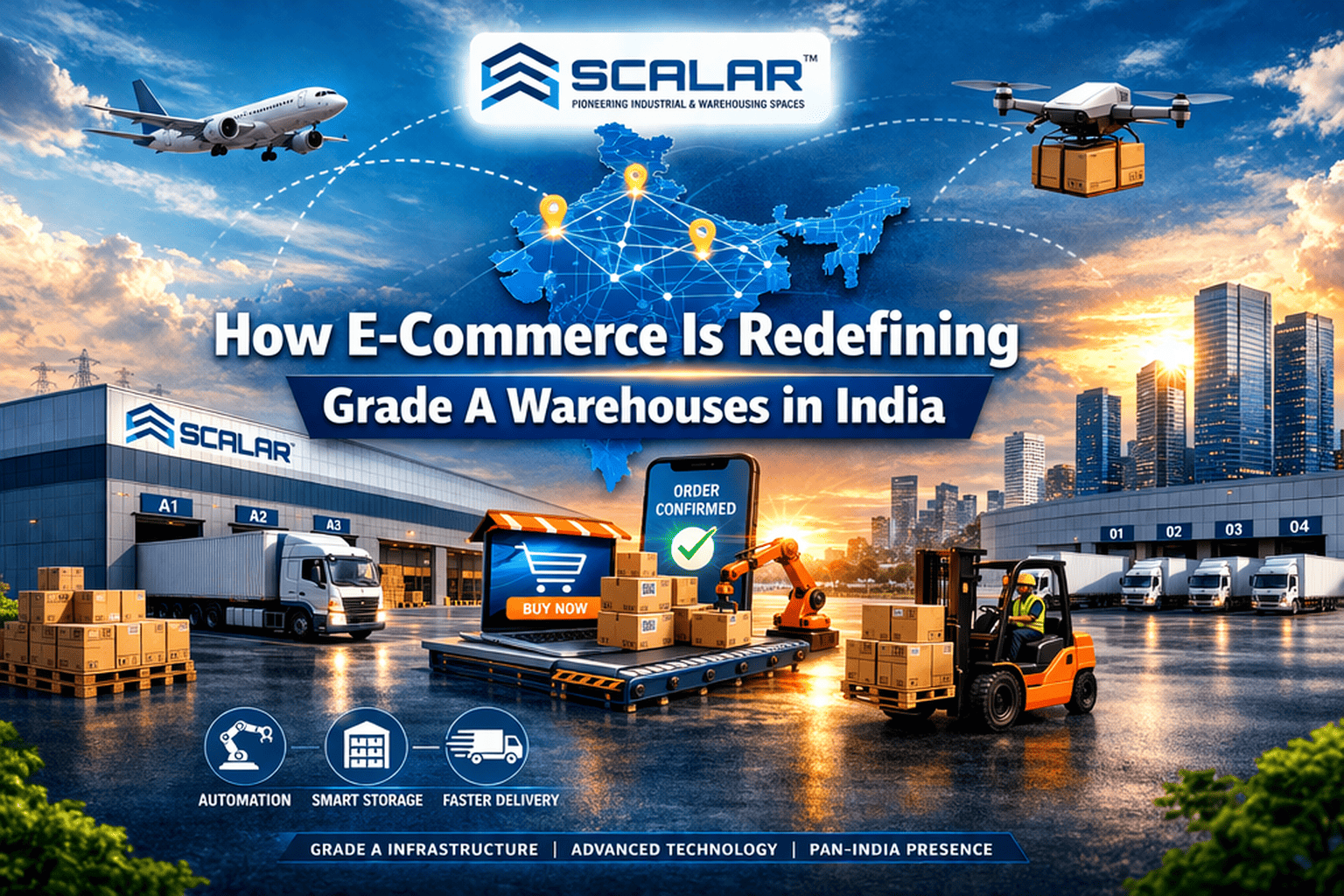
Online shopping has transformed the way India buys, sells, and delivers products. With millions of orders placed daily across marketplaces and direct-to-consumer brands, warehouses are no longer just storage spaces. They have evolved into highly organized, technology-driven logistics hubs that keep the entire e-commerce ecosystem running smoothly.
This blog explores how e-commerce is reshaping warehouse design in India, the emerging grade A warehouse design trends in India 2026, and the growing role of e-commerce in logistics and warehousing growth. It will help businesses understand how modern warehousing services and choosing the best warehousing leasing service can improve logistics efficiency.
FROM STORAGE TO STRATEGIC HUB: HOW WAREHOUSE DESIGN HAS EVOLVED?
Traditionally, warehouses were simple storage facilities, however the rise of e-commerce has transformed them into strategic logistics hubs that play a vital role in supply chain efficiency. Here are some major changes that define modern grade A warehouse design trends in India 2026:
1. Larger and More Efficient Spaces-
Modern warehouses are designed with higher ceilings, wider aisles, and better floor load capacity. These features help businesses store more goods efficiently while enabling easy movement of equipment and goods.
2. Strategic Locations-
E-commerce companies rely heavily on quick delivery. As a result, warehouses are now located closer to urban centers, highways, and transportation networks.
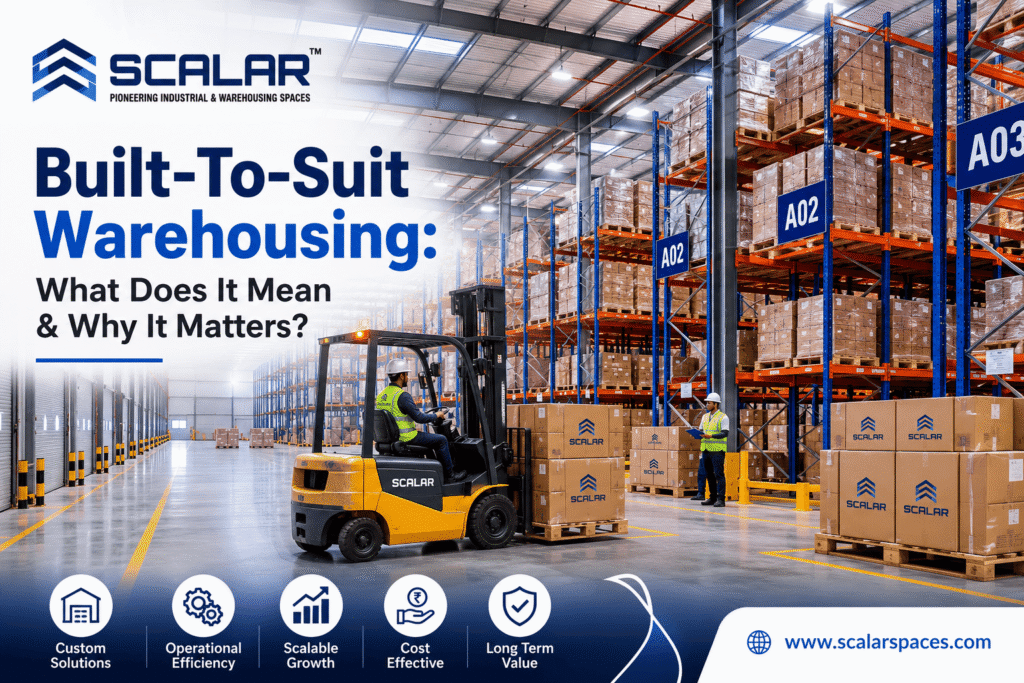
3. Built-to-Suit Warehousing-
Companies today often require customized spaces designed according to their operational needs. This is where the concept of built to warehouse infrastructure like SCALAR SPACES becomes essential.
4. Multi-Purpose Logistics Facilities-
Modern warehouses are no longer limited to storage. They support packaging, sorting, labeling, inventory management, and order fulfillment everything under one roof.
NEW TECH THAT CHANGES DAILY OPERATIONS-
Technology is one of the biggest forces driving innovation in modern warehousing services. Here are some technologies transforming warehouse operations:
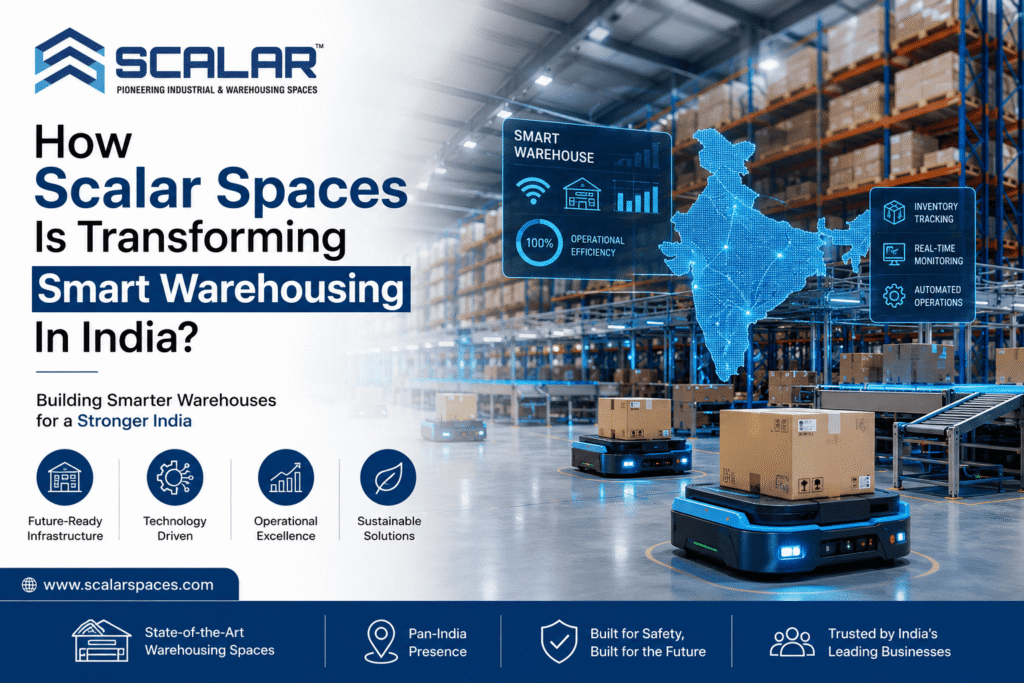
1. Automated Warehouses
Automated warehouses use robotic systems, conveyor belts, and automated sorting systems to streamline operations. This reduces human error and significantly improves efficiency.
2. AI-Powered Inventory Management
AI is every industry so why not in the warehousing industry? AI helps businesses predict demand patterns, optimize storage layouts, and manage inventory more efficiently.
3. Smart Warehouse Management Systems
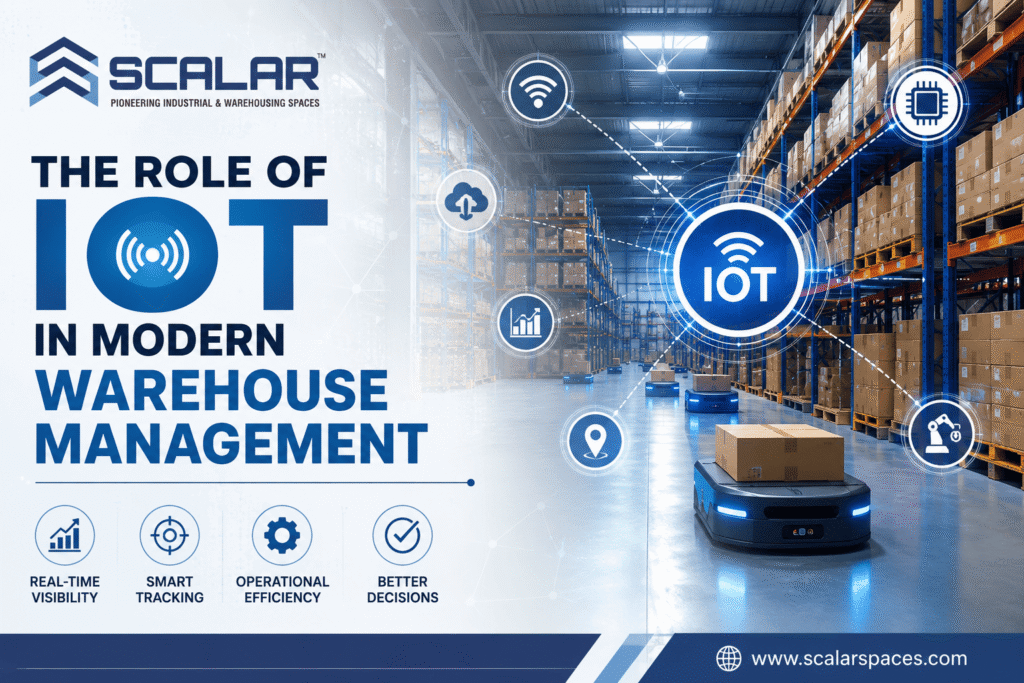
Warehouse Management Systems (WMS) provide real-time tracking of inventory, shipments, and operational workflows. These systems allow businesses to monitor operations and reduce delays.
4. Integration with E-Commerce Platforms
Modern warehouses integrate directly with e-commerce platforms, enabling seamless order processing and faster dispatch.
2026 MOVES TOWARDS FLEXIBLE, SCALABLE WAREHOUSING-
Here are some emerging grade A warehouse design trends in India 2026:
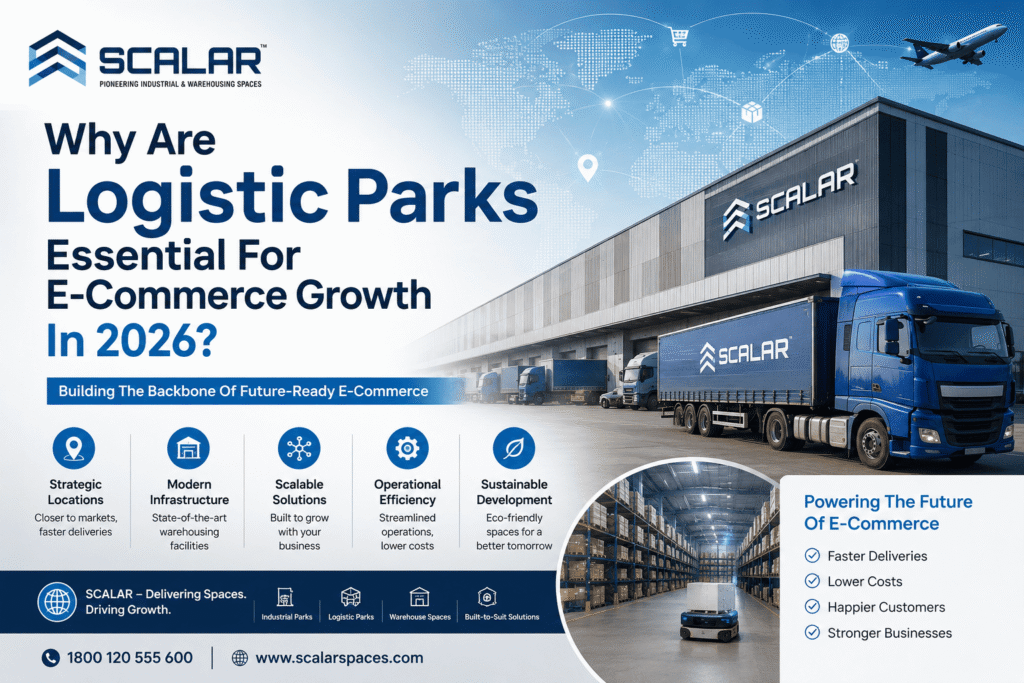
1. Smart Logistics Parks
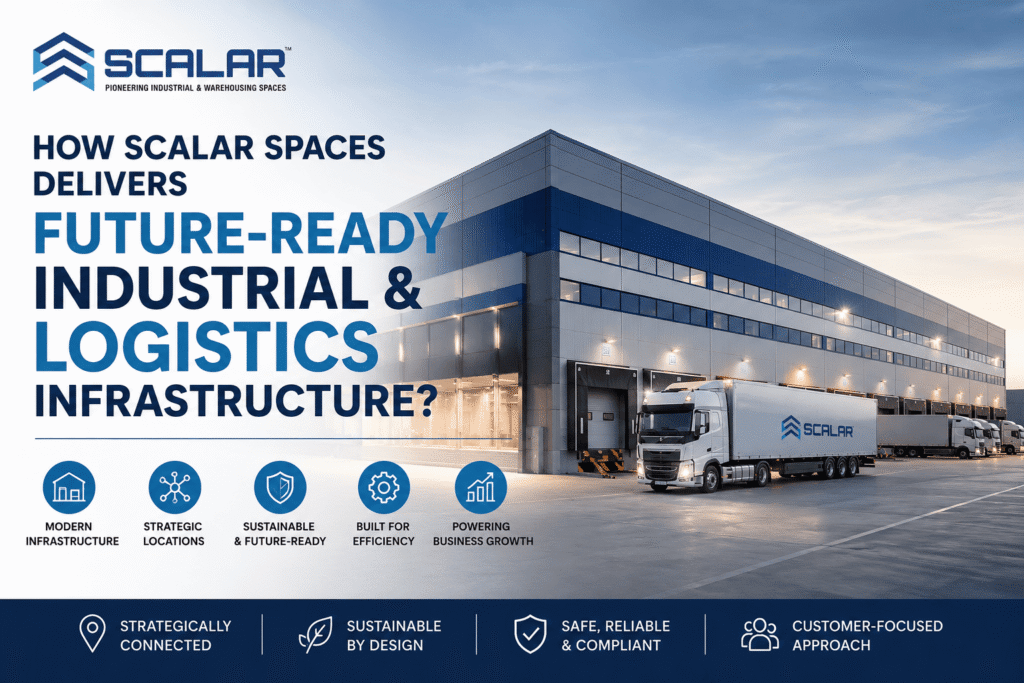
Large-scale smart logistics parks like SCALAR SPACES are emerging across India. These parks bring together multiple warehouses, transportation hubs, and logistics services in one integrated location.
2. Scalable Storage Infrastructure
Warehouses today are designed with expansion in mind. Businesses can increase storage capacity or modify layouts as demand grows.
3. Sustainability in Warehouse Design
Modern warehouses are also becoming environmentally friendly. Features like solar panels, energy-efficient lighting, and rainwater harvesting systems are becoming standard.
4. Demand for Professional Warehousing Leasing Services
As warehouse infrastructure becomes more advanced, businesses are increasingly relying on professional providers like SCALAR SPACES offering the best warehousing leasing service.
THE FUTURE & CHALLENGES AHEAD-
While the growth of e-commerce has created huge opportunities, it has also introduced new challenges for the warehousing industry.
1. Increasing Demand for Grade A Warehouses
The demand for high-quality warehouses is rising rapidly. Businesses are seeking facilities with better technology, security, and operational efficiency.
2. Infrastructure Development
To support the rapid growth of online retail, India must continue investing in better roads, transportation networks, and logistics infrastructure India relies on.
3. Skilled Workforce
Automation and advanced technologies require skilled professionals who can manage and maintain these systems effectively.
4. Cost Management
As warehouses become more advanced, operational costs may increase. Businesses must carefully balance efficiency and cost-effectiveness.
FAQs-
1. How will AI redefine warehousing in the future?
A. AI will enable predictive inventory management, automated sorting systems, and smarter supply chain planning.
2. What is the scope of the warehousing industry in India?
A. The warehousing industry in India has massive growth potential due to the rapid expansion of e-commerce, manufacturing, and retail sectors.
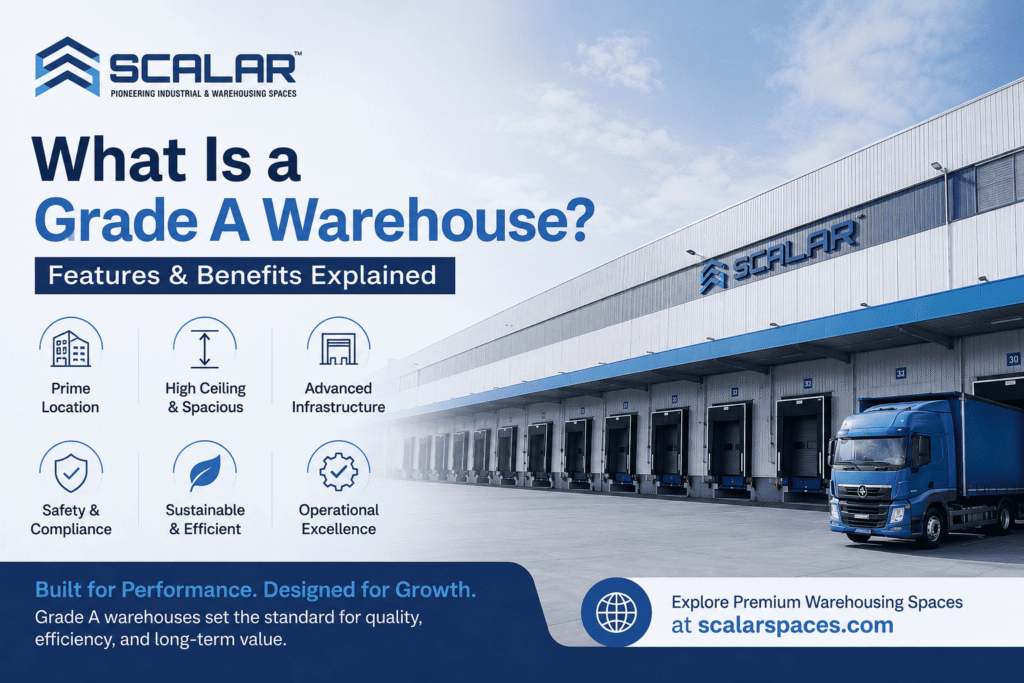
3. Why are Grade A warehouses important for e-commerce?
A. Grade A warehouses offer modern infrastructure, better storage systems, and advanced technology
4. What should businesses look for in the best warehousing leasing service?
A. Businesses should look for strategic location, advanced infrastructure, scalability, security features, and integration with modern logistics technologies when choosing a warehouse leasing partner.
CONCLUSION
The rise of online retail has completely transformed the warehousing landscape in India. From traditional storage spaces to advanced logistics hubs, warehouses today are designed to support fast-moving supply chains, automated operations, and efficient order fulfillment.
Ready to future-proof your logistics operations? Let Scalar Spaces help you with cutting-edge warehouse design strategies to transform your fulfillment for the e-commerce era. Visit scalarspaces.com today for a consultation, and unlock your next level of operational efficiency.