Cold storage warehouse vs standard warehouse: which one do you need?

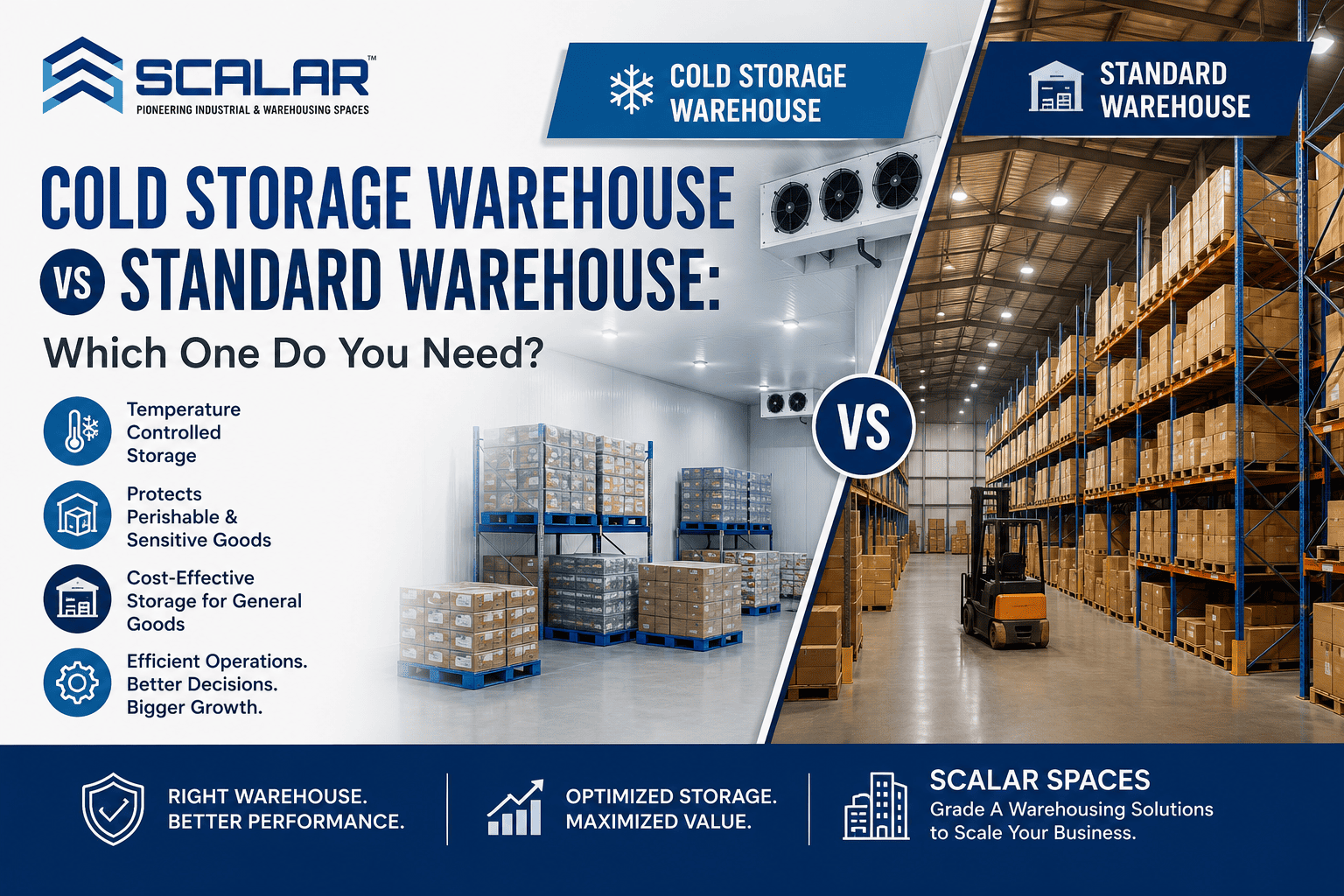
Choosing a warehouse is not only about finding a large building and filling it with goods and inventory. The type of warehouse which you select affects product quality, operational efficiency and also the overall warehouse operating costs.
In this blog we will be talking about exactly this. We will focus on what is cold warehouse vs standard warehouse, what is the difference between the two and why you should choose SCALAR SPACES- Grade A warehousing solutions to scale your business.
What is a cold storage warehouse?
Cold storage warehousing are special storage facilities which are designed to store goods which require a certain level of temperature. For this advanced refrigeration systems are used in order to preserve perishable goods. These warehouses are used by industries such as pharmaceuticals and food because they need a temperature control environment.
Since these warehouses are built with specialised infrastructure they require greater investment, maintenance and energy consumption than standard warehouses. However, for industries having temperature-sensitive products these warehouses are essential rather than optional.
What is standard warehouse?
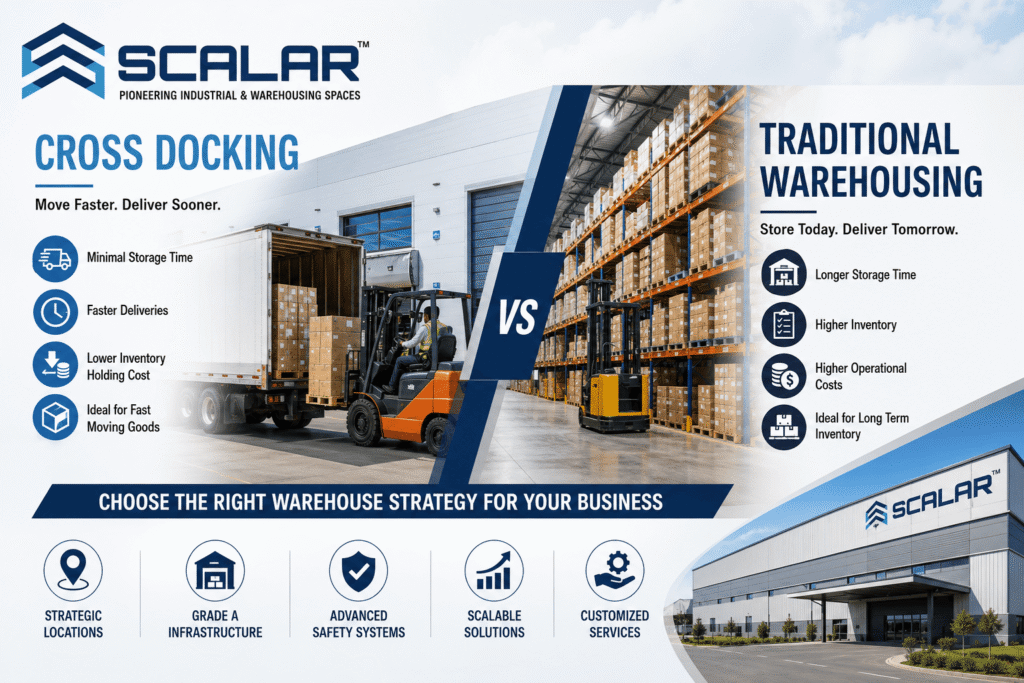
A standard warehouse often referred to as a dry warehouse or an ambient warehouse, is designed to store goods under normal environment conditions. These warehouses do not require any specialized refrigeration or freezing systems.
These warehouses are suitable for products such as:
- Furniture
- Clothing and textile
- Electronics
- Machinery
- Consumer goods
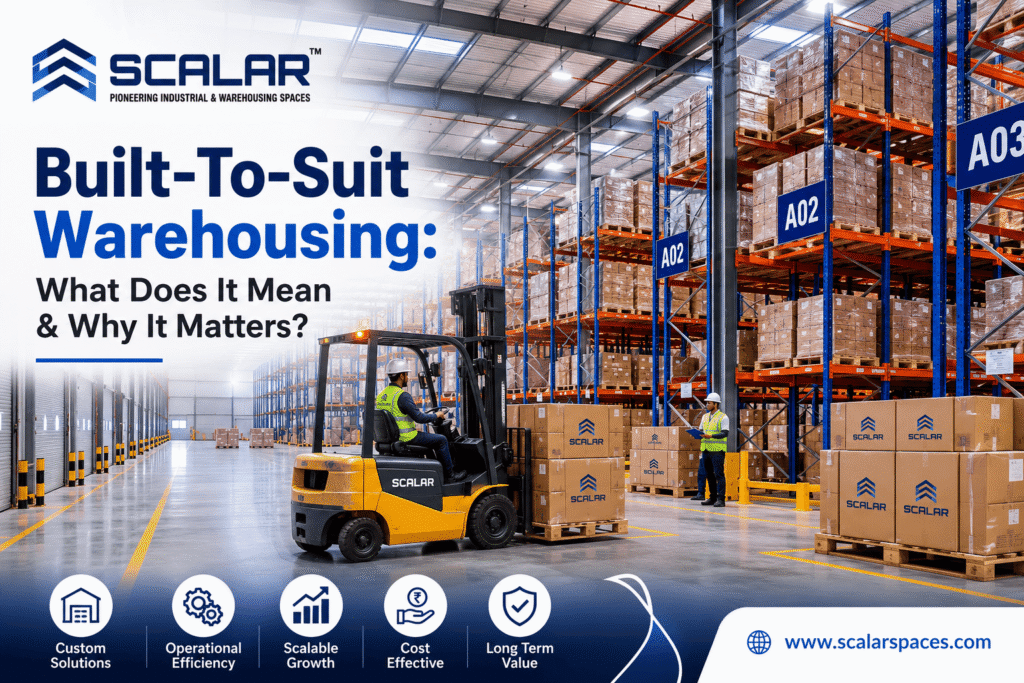
The main purpose of a standard warehouse is to provide a secure, organized and accessible space for storing, managing and distributing goods. Our built-to-suit solutions at SCALAR SPACES have facilities such as fire safety, high ceilings, security survelliance and many more.
Cold storage vs standard warehouse
This usually depends upon what you are storing. Let’s see what is the difference between the two:
1. Product Requirements
This is one of the most important factors. If your products can spoil,melt, degrade or lose its effectiveness when exposed to heat, a cold warehouse is the best choice.
On the other hand, products such as furniture, machinery or packaged consumer goods usually do not require temperature-controlled conditions. A standard warehouse is more suitable for them.
2. Infrastructure Requirements
The warehouse infrastructure requirement for both the warehouses is completely different. A standard warehouse usually focuses on storage capacity, racking system, flooring, ventilation and fire protection.
A cold storage warehouse requires all these things along with insulated panels, refrigeration systems, temperature monitoring, humidity control and reliable power backup.
3. Operating costs
Cold storage warehouses have higher warehouse operating costs because refrigeration systems consume considerable energy. Also maintaining these warehouses with necessary equipment and power backup also can add in all the expenses.
Standard warehouses have less operating costs because they do not need continuous refrigeration. Therefore, if you are storing perishable goods and going for a standard warehouse, then it may not be the best idea.
4. Flexibility
Standard warehouses are generally more flexible for businesses storing different types of non-perishable products. Inventory can be moved, stored and organized without the restrictions which require certain temperature control.
Cold storage warehouses however provide specialized flexibility for businesses that need different temperature conditions. A warehouse which has different temperature zones can support chilled, frozen or controlled-temperature inventory.
Benefits and limitations of both options
Understanding the benefits and limitations of both warehouses will help in making the decision. Let’s see what are those:
| Warehouse Type | Benefits | Limitations |
| Cold storage warehouse | Maintains controlled temperature & humidity levelsProtects perishable & temperature-sensitive productsReduces the risk of spoilage & product damage | Higher infrastructure & construction costsHigher electricity costsMore operating costs |
| Standard storage warehouse | Lower construction & operating costsSuitable for non-perishable productsSuitable for manufacturing, retail, and business logistics | Not suitable for products which require controlled temperatureLimited control over humidityCannot provide specialized cold-chain storage capabilities |
FAQ’s
1. What is the difference of structure in both?
A. The main difference is about the specialized constructions and systems.
2. Which warehouse is best for large business?
A. It depends upon the products and the supply chain requirements of the business.
3. Where are your warehouses located?
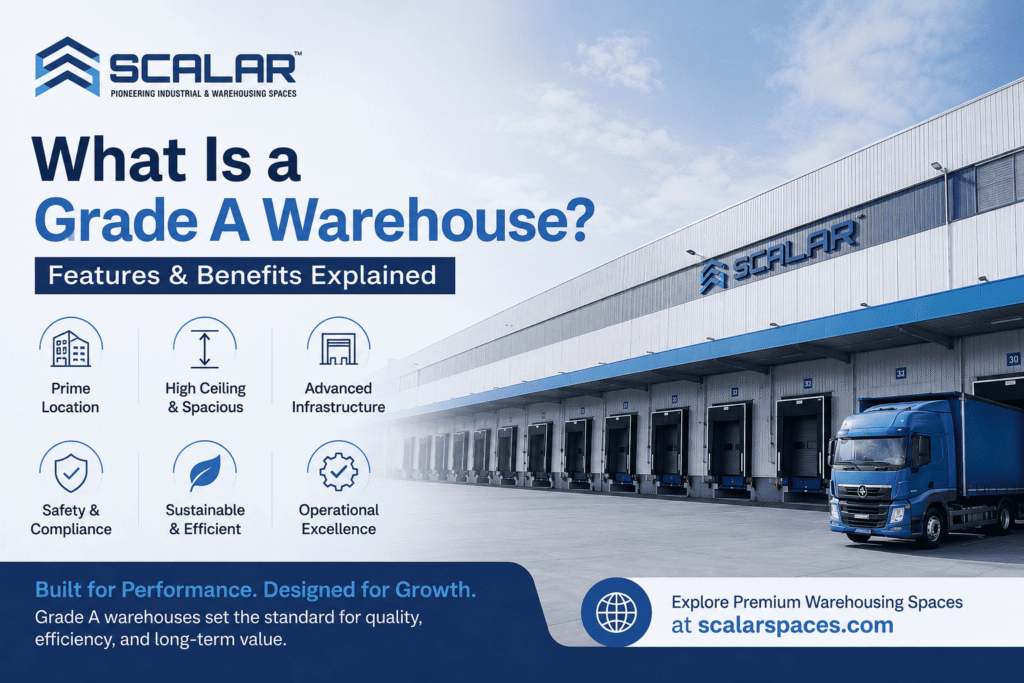
A. We have ready-to-move in, built-to-suit and Grade A warehouses located at Sansawadi, Kolhapur, Maraimalai, Kistapur and many more
Conclusion
Therefore to conclude whichever warehouse you choose depends upon the products your business deals with, operational requirements and also long-term business plans. And if you are looking for leasing warehouse service in hyderabad then we at SCALAR SPACES are your best choice. Contact us today.
FOLLOW US ON INSTAGRAM,