How Warehouse Automation Reduces Operational Costs?

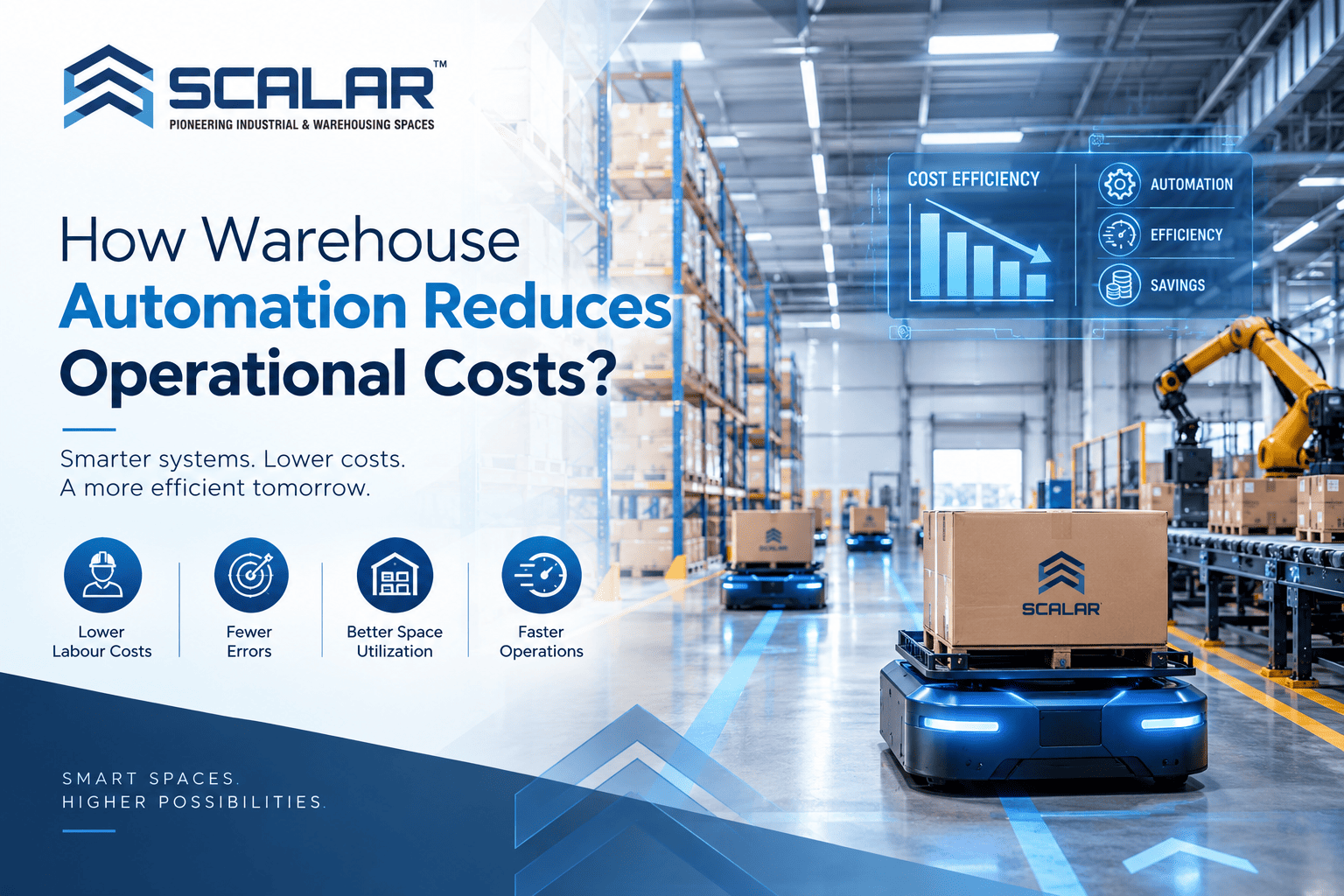
Warehousing operations involve various costs that can significantly impact the profit of a business. From labour expenses, inventory management, energy consumption and many more, these costs can add up quickly.
But, automation in technology has transformed warehouse management a lot. In this blog we will be discussing all about how warehouse automation reduces operational costs and why to choose our Grade A warehousing solutions at SCALAR SPACES.
What Is Warehouse Automation?
Warehouse automation simply means using technology, machines, and software to do tasks that used to be done manually. For example like conveyor belts moving goods, sensors tracking inventory, and a warehouse management system keeping everything organised on a screen.
It’s not about replacing people entirely. It’s about letting machines handle the repetitive, time-consuming work so that manual energy can be used in other things. Businesses today are shifting into built-to-suit warehouse models too, where the space itself is designed keeping automation and future scalability in mind.
Understanding Operational Costs In Warehousing
Before we get into the benefits, let us understand the operational costs:
- Labour costs– Wages, overtime, training, and turnover expenses for staff.
- Inventory management costs– Money lost due to overstocking, understocking, or misplaced items.
- Energy consumption– Lighting, cooling, and running equipment throughout the day.
- Errors and returns– Wrong shipments, damaged goods, and the cost of fixing these mistakes.
- Space utilisation– Poorly organised warehouses waste valuable square footage.
- Downtime– Equipment breakdowns or slow processes that stall operations.
How Warehouse Automation Reduces Operational Costs?
Here’s a detailed, honest look at how warehouse automation saves money in practical, everyday ways.
1. Cuts down labour expenses
Automation doesn’t eliminate jobs entirely, but it does reduce the number of people needed for repetitive tasks like sorting, packing, and moving goods. This means lower payroll costs, less dependency on seasonal hiring, and fewer errors caused by fatigue or human oversight.
2. Improves inventory accuracy
A good warehouse management system tracks stock levels in real time. No more guessing games or manual counting. This directly reduces the cost of overstocking (which ties up your cash) and understocking (which leads to lost sales).
3. Reduces errors and returns
Automated picking and packing systems are far more accurate than manual processes. Fewer wrong shipments mean fewer returns, less wasted packaging, and happier customers, which saves both money and reputation.
4. Optimises space usage
Automated storage and retrieval systems (AS/RS) can stack inventory more efficiently, using vertical space that manual labour often can’t utilise well.
5. Lowers energy costs
Smart sensors and automated lighting or climate control systems only use energy where and when it’s needed. Over time, this adds up to noticeable savings on utility bills.
6. Reduces downtime and maintenance costs
Modern automated warehouse systems come with predictive maintenance features. Instead of waiting for a machine to break down, the system alerts you beforehand, saving on emergency repair costs and avoiding operational delays.
7. Minimises safety-related expenses
Automation reduces the need for workers to lift heavy loads or operate in risky conditions, which lowers the chances of workplace injuries. Fewer accidents mean fewer compensation claims and insurance costs.
How Warehouse Automation Improves Roi?
Warehouse automation also helps in improving the ROI of business operations. Lets see how:
- Faster payback period– Even though automation requires upfront investment, the savings on labour, errors, and energy usually help businesses recover costs within a reasonable timeframe.
- Higher throughput– More orders processed per day means more revenue potential without proportionally increasing costs.
- Better scalability– As your business grows, automated systems can scale up without requiring the same level of additional manual hiring.
- Improved customer satisfaction- Faster, more accurate deliveries lead to repeat business and stronger customer loyalty, which indirectly boosts your bottom line.
- Long-term asset value– A warehouse fitted with automation and modern infrastructure holds better long-term value, especially if you’re leasing or eventually reselling the space.
FAQ’s
1. How does AI improve warehouse operations?
A. AI helps warehouses predict demand, optimise stock levels, and plan the most efficient routes for picking and packing.
2. How do automated robots in warehouses boost productivity?
A. Robots can work continuously without breaks, move goods faster than manual labour, and handle repetitive tasks with much higher accuracy.
3. Where are your warehouses located?
A. Our warehouses are located in Maraimalai Nagar, Kistapur, Sansawadi, Kolhapur and many more.
Conclusion
Warehouse automation isn’t just a trend, it’s a practical way to cut costs and run smoother operations. From saving on labour to reducing errors and energy use, the benefits genuinely add up over time. And if you are looking for best leasing warehouse service then contact us at SCALAR SPACES today.
FOLLOW US ON INSTAGRAM.