


Common Mistakes Businesses Make When Leasing Industrial Warehouses

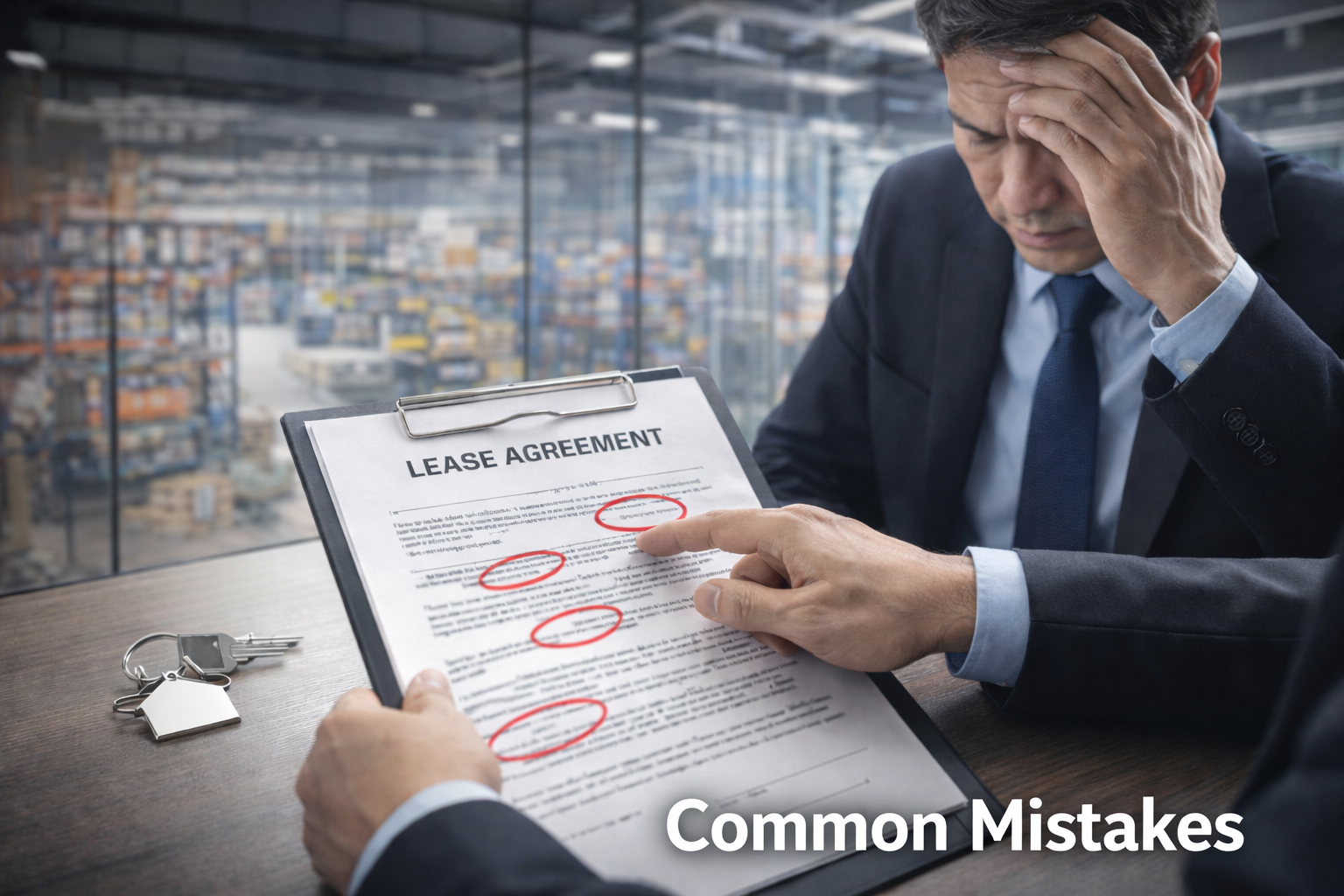
Leasing an industrial warehouse appears to be a sound business decision. You weigh the leasing costs, look at the leasing options, and act quickly so that business does not come to a standstill. Most entrepreneurs would concur that leasing an industrial warehouse appears to be a straightforward process. However, the truth is that industrial warehouse leasing errors can sometimes become apparent only after losing money, time, and efficiency.
This blog is all about clarity and control. By being aware of the typical leasing mistakes that businesses make while leasing industrial warehouses, you can easily avoid pitfalls related to additional expenses, inefficiencies, and limitations in growth. We will highlight the typical leasing errors and explain how selecting Grade A and scalable industrial warehouses can ensure smooth business operations in the present and future growth in the days to come.
#1 Mistake: Making Location Decisions Without Logistics Planning
Location is strategy, not convenience.
- Companies tend to select locations for their warehouses solely based on the cost of rent without considering how far the location is from highways, ports, suppliers, and delivery hotspots.
- Companies that do not plan their warehouse locations well end up increasing their fuel costs, delivery times, and driver fatigue.
- Companies that plan their warehouse locations well for logistics purposes tend to have better turnaround times and better supply chain performance.
When businesses skip industrial warehouse location planning, daily inefficiencies quietly erode profits.
#2 Mistake: Leasing Based on Current Requirements Rather Than Future Growth
Growth without space creates chaos
- Businesses often lease warehouses that meet their current volume requirements but do not align with future growth plans.
- Growth leads to constant relocation, renegotiation of leases, or storage in multiple locations.
- A scalable industrial warehouse leasing solution will ensure that space is not created against growth but with it.
Future-focused businesses must be future-focused on logistics real estate from the outset.
#3 Mistake: Ignoring Warehouse Infrastructure Quality
Infrastructure defines productivity
- Flooring load capacity, dock height, ventilation, and column spacing often get overlooked.
- Weak infrastructure increases equipment wear, handling risk, and downtime.
- Grade A industrial warehouses support automation, safety, and operational efficiency.
Modern businesses benefit from warehouse infrastructure planning that supports real workloads.
#4 Mistake: Overlooking Compliance and Regulatory Readiness
Compliance gaps can shut operations overnight
- Fire safety norms, zoning approvals, and environmental clearances are often assumed.
- Non-compliance leads to penalties, operational halts, and insurance complications.
- Leasing warehouse compliance-ready spaces in India reduces legal and operational risk.
Smart leasing decisions always prioritise industrial leasing regulations and documentation.
#5 Mistake: Evaluating Rent Instead of Total Operating Cost
Low rent is not always low cost
- Businesses focus on monthly rent but ignore utilities, security, maintenance, and logistics inefficiencies.
- A slightly higher rent in managed warehouse parks often lowers total spend.
- Understanding industrial warehouse leasing cost requires evaluating the complete operating picture.
Total efficiency matters more than headline rent numbers.
#6 Mistake: Viewing Leasing as a Transaction vs. a Partnership
Warehousing functions better with support
- The traditional landlord offers real estate, not operational security.
- Enterprises require warehouse solutions that provide maintenance, security, and expert management.
- A reliable industrial leasing partner makes the process smoother.
Warehousing in the modern era requires partnership, not just contracts.
#7 Mistake: Failing to Conduct Lease and Site Due Diligence
What you skip now costs more later
- Lease exit provisions, escalation provisions, and liabilities are often not read.
- Poorly drafted agreements lead to a lack of flexibility and future risk.
- Industrial property due diligence helps to ensure operational flexibility.
Clear documentation avoids warehouse lease agreement mistakes that stall growth.
FAQs
1. What should businesses check before leasing an industrial warehouse?
A. Businesses should assess warehouse infrastructure quality, location accessibility, compliance readiness, scalability options, and total warehouse operating cost. Reviewing these factors prevents operational disruption and financial surprises.
2. Is leasing an industrial warehouse better than buying?
A. For growing companies, industrial warehouse leasing offers flexibility, lower upfront investment, and faster setup. Leasing supports scalability without locking capital into fixed assets.
3. Why do fast-growing businesses outgrow warehouses quickly?
A. Because they lease based on present demand instead of future projections. Choosing scalable industrial warehouses prevents repeated relocations and supply chain disruption.
4. How do managed warehouse parks improve daily efficiency?
A. Managed warehouse parks handle infrastructure maintenance, compliance, and security, allowing businesses to focus on logistics and growth rather than facility issues.
Conclusion
This blog highlighted how industrial warehouse leasing mistakes quietly impact cost, efficiency, and scalability. From poor location planning to ignoring compliance and infrastructure, each oversight compounds over time.
At Scalar Spaces, we offer Grade A, scalable, and compliance-friendly industrial warehouses along growth routes. Check out our website to learn more about warehouse solutions that are optimized for efficiency and scalability, and follow us on Instagram for more expert advice on efficient warehousing and industrial development.