How To Choose A Warehouse Location For Efficient Distribution Across South India?

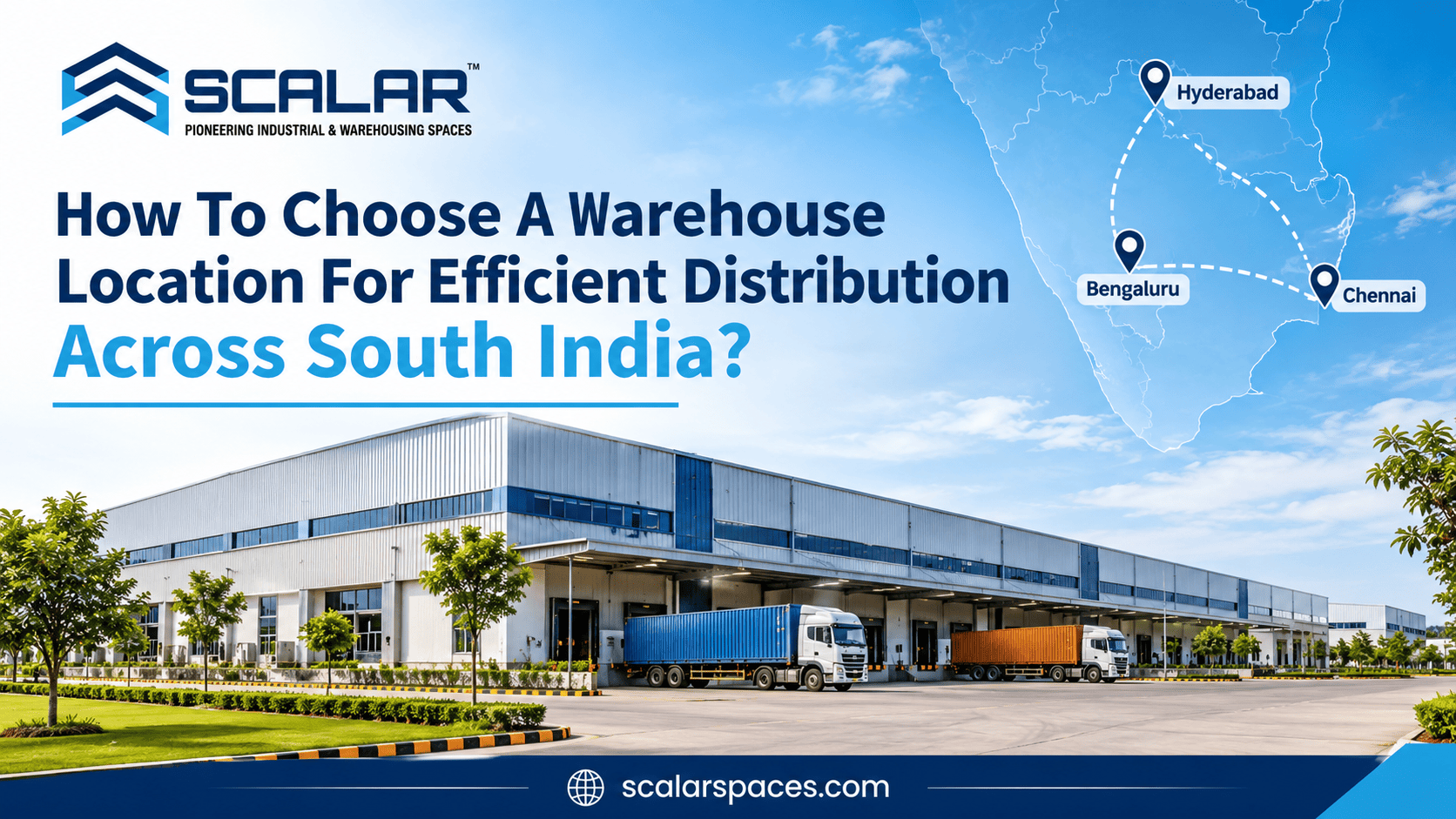
Choosing the correct warehouse matters a lot because if you choose the wrong location, it affects everything starting from distribution of goods, each truck has to wait a little longer for pickup and delivery.
In this blog we will be discussing why it is important to choose an ideal location for your warehouse operations, why you should understand your distribution network and target market and why choosing the best warehouse for leasing service at SCALAR SPACES helps to scale your business.
What Does Efficient Distribution Mean?
Efficient distribution means how well a company manages its logistics, inventory and transportation and order fulfillment to deliver products in a timely, cost-effective and in a way that customers are satisfied.
It is usually the ratio of the output which means on time and in-full deliveries to input which is cost, time and the manpower across your route-to-market network.
Let us understand this with an example- A truck having food products has to move across retailers in Hyderabad, Bengaluru, Chennai and Kochi. If its warehouse is not located in the proper location, the truck has to travel extra kilometers to reach major highways.
Why Warehouse Location Matters For Distribution In South India?
South India has a diverse industrial and commercial landscape, with manufacturing centres spread across several states. Here are few reasons why the location matters:
1. Better connectivity to major transport routes
A warehouse which is located near important highways, freight corridors, or transport hubs can make the movement of goods more convenient. Trucks can access major routes without spending excessive time while going through city traffic.
2. Less transportation and operating costs
Transportation is an important part of warehouse and distribution expenditure. A location that looks affordable first might be more expensive if vehicles have to travel to large distances or take more time to reach the customers.
3. Access to reliable labour and infrastructure
Warehouse operations depend on people and supporting infrastructure. Loading, unloading, inventory, packaging and dispatch all require an accessible warehouse.
While choosing a built-to-suit warehouse, check whether the surroundings area offers access to workers, transport services, maintenance providers, and other operational support.
Understanding Your Distribution Network And Target Markets
Before searching for Grade A warehousing solutions, take a closer look at your supply chain. In the following ways you can understand your distribution network and target markets-
1. Identifying your primary markets
Start by listing the cities, industrial areas, retailers, distributors, and customer locations your business serves more frequently.
Review your sales data and identify:
- Cities generating the highest order volumes
- Areas where delivery delays occur regularly
- Markets where you expect future growth
2. Calculate Inventory requirements
Warehouse selection should also reflect how much inventory you need to store and how quickly it moves. A business handling fast-moving customer goods may require such stock that does not replenish and also is ready for rapid despatch.
3. Plan for storage capacity and scalability
Your current warehouse may not be feasible for your needs until two to three years from now. That’s why it is important to consider storage capacity and scalability of the warehouse before signing the lease.
Mistakes To Avoid While Choosing A Warehouse Location
Before finalising a lease, look out for the following mistakes:
- Choosin a warehouse without comparing the costs can lead to increase in handling costs
- Leasing a facility with insufficient space can disrupt operations when inventory increases
- Before choosing a property for lease you need to consider rental escalation clauses and conditions for modifying the premises
FAQ’s
1. How to design warehouse layout?
A. Designing a warehouse layout starts with understanding the products you store, and the movement of the goods through the facility.
2. What does international logistics mean?
A. International logistics refers to the planning and management of goods moving between countries.
3. What is an example of a warehouse and distribution?
A. Warehouse provides storage and order processing, while distribution covers the movement of products to customers.
Conclusion
Therefore, to conclude choosing the right warehouse location is an important decision for any business that depends on reliable distribution. And if you are looking for best warehouse leasing in hyderabad then we at SCALAR SPACES are your best choice. Contact us today.
Follow Us On Instagram.